CVC Academy – AC2 – Introduction to Racing Strategy and Tactics
Who is the CVC ACADEMY Level 2 (AC2) course intended for?
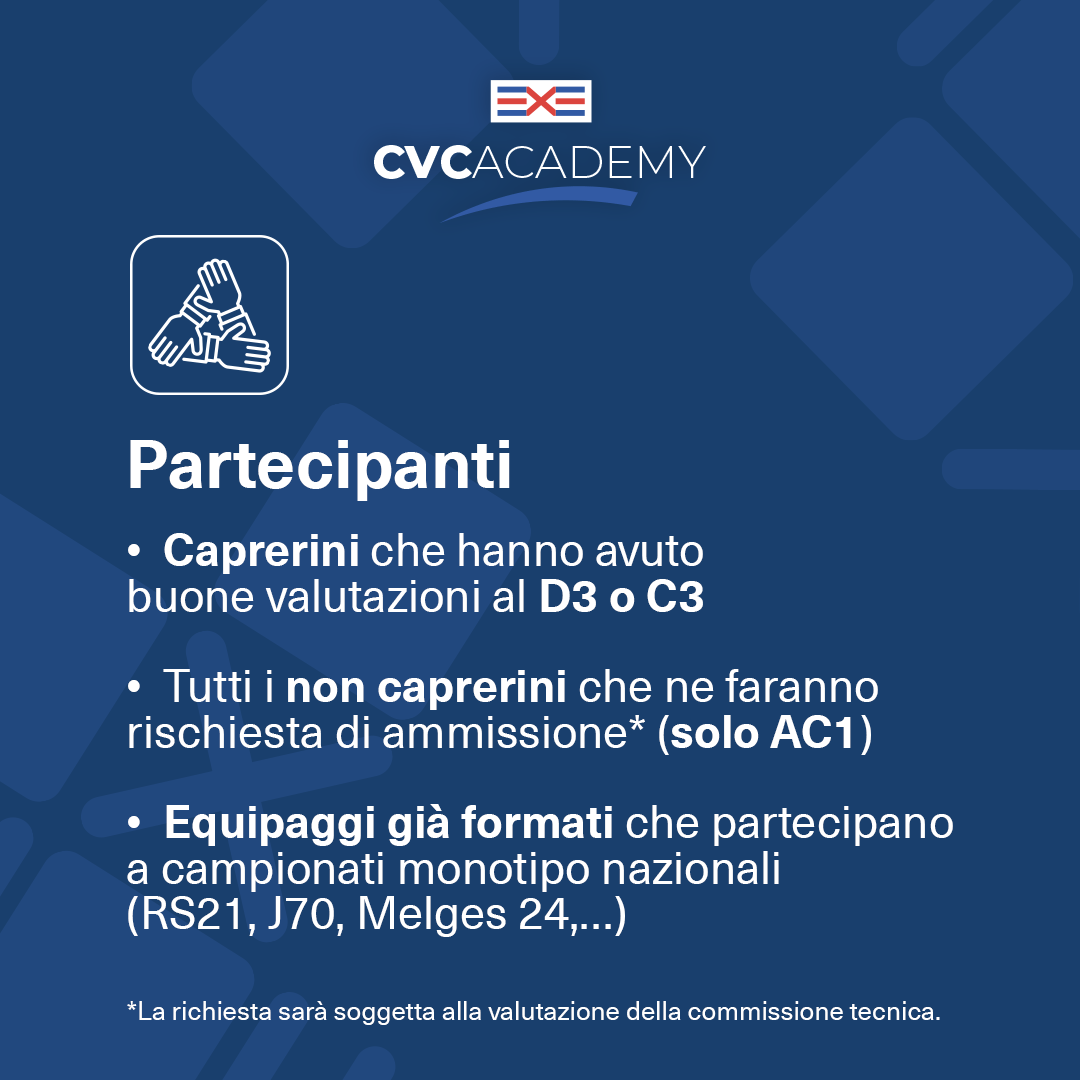
For those who have already acquired the technical skills needed to perform racing maneuvers and adjust sails, and who want to learn fleet racing strategies and tactics. The course requires a level of physical fitness appropriate for this demanding sport.What are the minimum admission requirements?
- For those who have already taken courses at the Caprera Sailing Center: having successfully completed the AC1 course and received an invitation to the AC2 course
- For those who have not yet taken courses at the Caprera Sailing Center: having gained and being able to document significant experience in one-design regattas
The Course Syllabus
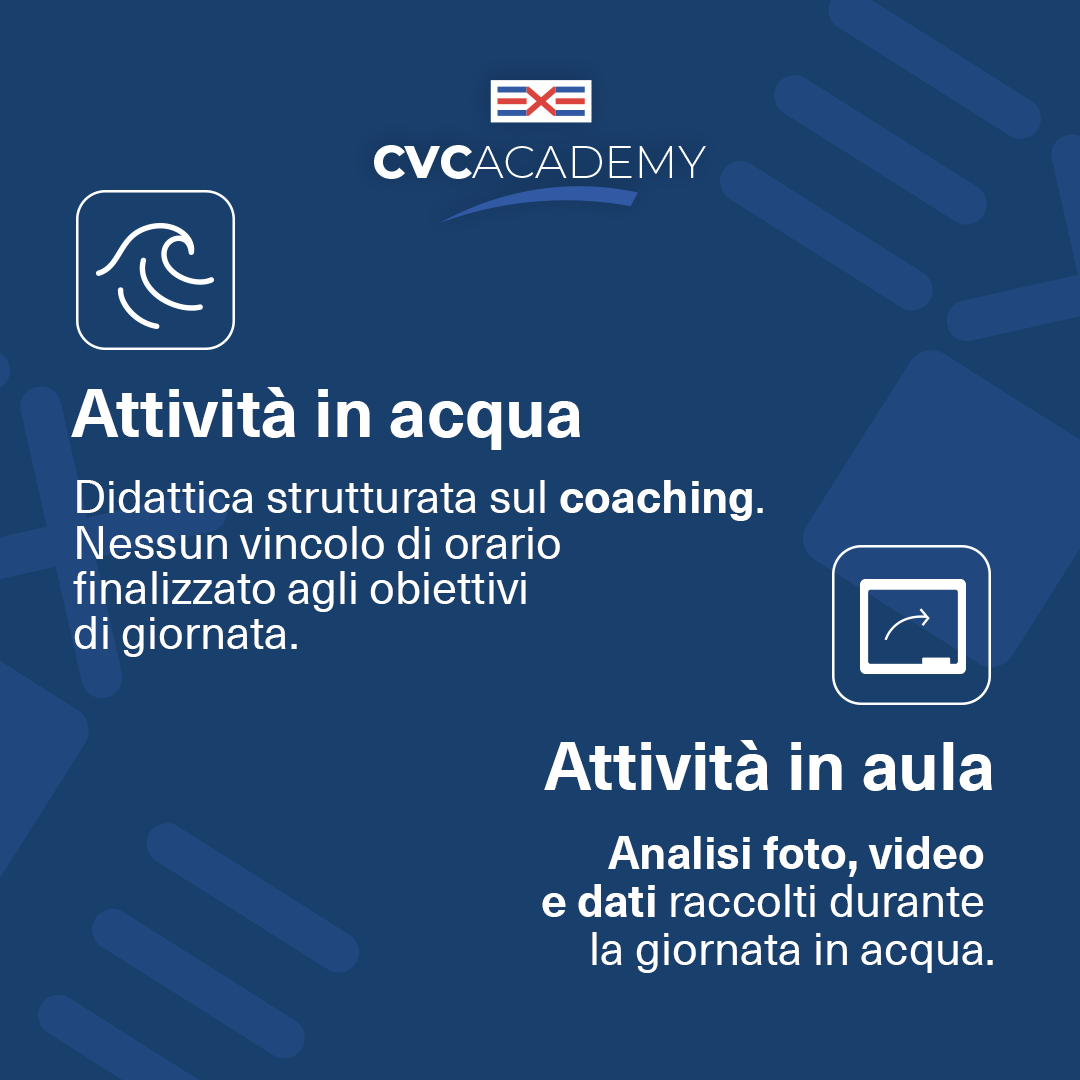
- Review and in-depth exploration of the topics covered in the AC1 course (maneuvers and adjustments) tailored to specific roles and crew configurations, with video support and on-water coaching
- Review of safety maneuvers during a regatta (quick-stop with white sails and with the gennaker)
- an in-depth look at preparing the boat for the regatta and adjusting the mast
- Analysis of onboard roles and crew training criteria, communication during a race, and trim management in various points of sail
- In-depth analysis of a role based on physical abilities and characteristics to maximize the crew’s overall performance
- An overview of the factors driving performance: technique, training, communication, concentration, anticipation, planning, managing crew briefings and debriefings, and leadership on board
- An Overview of Weather as It Applies to Regattas: General Overview, Synoptic Analysis, Local Weather Analysis, Topography, and Wind Field
- Field and Route Analysis
- Definition of the racing strategy, in-depth analysis of tactical options in various on-water situations, target speeds, and onboard electronics
- Optimization of wave and gust management, optimization of starts based on strategy, optimization of tacking based on strategy and tactics
- In-depth look at fleet racing rules; in-depth look at protest procedures
Educational Materials
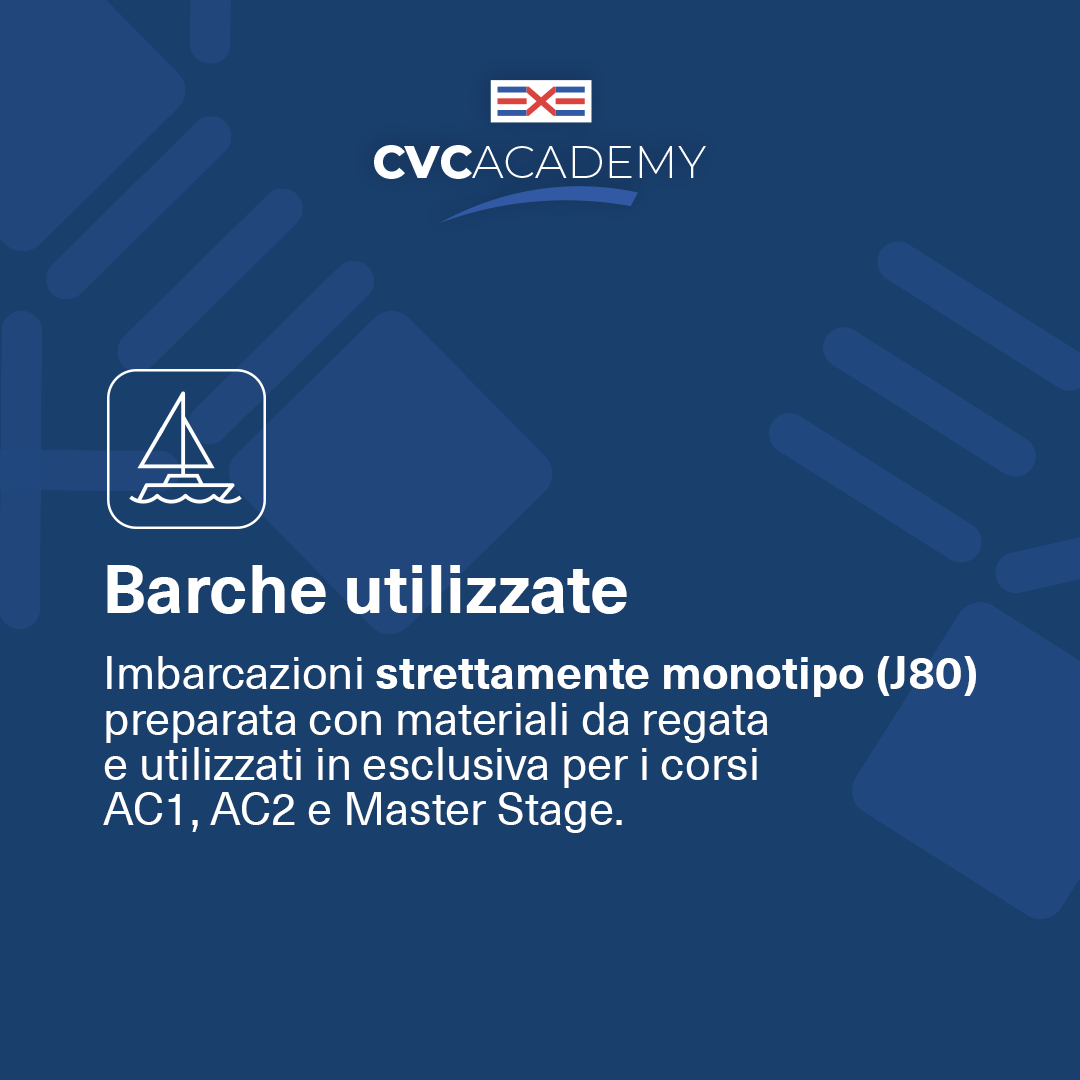
- Boats: J80
- One coach per team, on board only on the first day or as needed
- Regattas and water drills to support the program
- Electronic compass
- Track Analysis
- Videos to Support Teaching
- From round 24 through round 31, no alcohol will be sold at the Punta Coda store.
- Admission to the course is also open to crews of boats competing in national regattas for FIV-recognized classes
Useful Information | SpecialOffers and Discounts | Recommended Gear | Educational Trail
Please note—and the student acknowledges this upon registration—that the “release form” for the use of photo, audio, and video must be submitted as specified in the registration form, no later than 15 days before the course begins. The student acknowledges that, failure to submit this form will result in ineligibility to attend the course and will forfeit any right to a refund of amounts previously paid for any reason.
Useful Information
Below you will find useful information about taking our courses. If you have any questions, please call us at +39.02.86452191.
At least one month (30 days) before the course begins, you must:
- Upload a medical certificate (for at least non-competitive activities) in PDF format (you can use our form, which you’ll find here
Without a certificate, you will not be admitted to the courses (we remind Milan residents that we have an agreement with Medici In Famiglia regarding non-competitive medical certificates; full details are available here). - Upload the duly signed “waiver” form to your account. Failure to do so will result in exclusion from the courses:
– form for minors: ITA – ENG;
– form for adults: ITA – ENG; - Upload a single file containing a front-and-back copy of your ID
- If this is your first course at CVC, or if you haven't done so yet, you'll also need to upload a passport-sized photo of yourself.
- Enter your personal information in your account: “Personal Information” menu.
For your luggage, use soft bags that take up little space when folded (no hard-shell suitcases). Remember that cigarettes and tobacco products are not sold at the base.
For all courses:
- sleeping bag (or sheet + blanket)
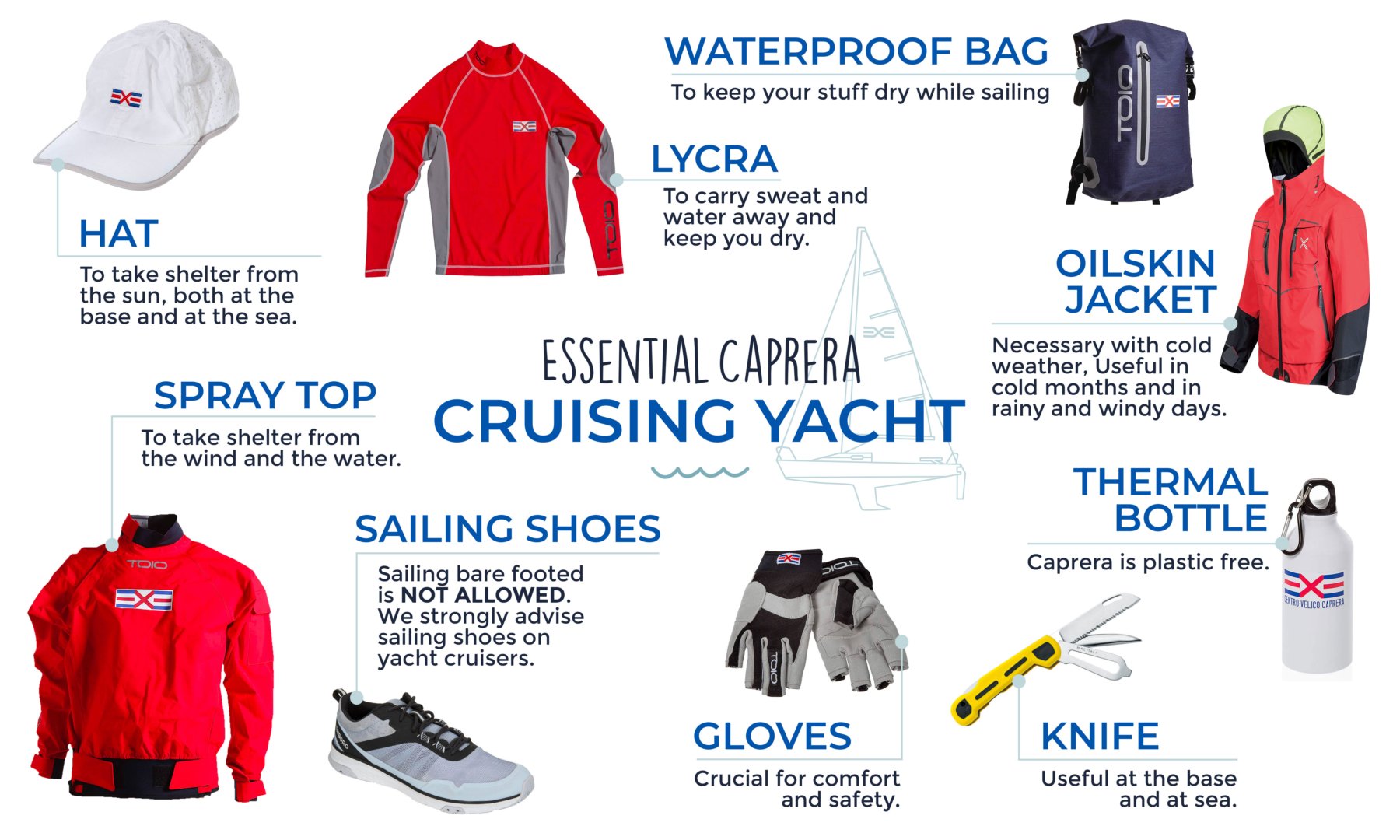
- sailor's knife (*)—essential on a boat for safety and on land as a table knife (see photo below)
- boat shoes and boat boots for cabin cruiser courses
- 2–3 sets of linens
- 2–3 pairs of athletic socks
- Casual shorts and pants
- Lightweight long-sleeved shirts and hats to prevent sunburn (light colors are recommended)
- wool or fleece sweaters (at least 2) to cope with the cold at sea, even during the summer months
- personal hygiene items* and towels
- hair dryer
- battery-powered flashlight*
- sunglasses
- sailing gloves*
- sunscreen
- water bottle or thermos
- You'll need a pair of closed-toe shoes for activities on land (the command post).
Specifically for courses on dinghies:
- Lightweight long- or short-sleeved T-shirts made of Lycra
- spray-on vest
- neoprene wetsuit*, essential in spring and fall, also recommended in summer
- High-top sailing shoes with socks (to protect your feet from the straps) or, better yet, neoprene shoe covers*. For the D3, D4, D5, and Foil courses, knee pads may be useful.
Specifically for courses on cabin cruisers:
- waxed canvas (*)—lightweight or heavyweight, depending on the season
- boat shoes with a suitable sole (no Superga or similar styles—they're slippery), boots during the cooler months
* items that can be purchased at the Caprera store
From the mainland > Olbia
By ship (arrival in Olbia or Golfo Aranci)
- With TIRRENIA, MOBYLINES, or GRIMALDI, departures from Genoa, Livorno (the night before), or other ports, arriving in Olbia. For information on current agreements, please send an email to the office.
- with SARDINIA FERRIES, departing from Livorno (the night before) and arriving in Golfo Aranci.
, etc.
By plane (arrival in Olbia)
- AEROITALIA, EASYJET, VOLOTEA, or other airlines, with departures from major Italian and international cities
Olbia > Palau
Palau is 50 km from Olbia. Here are the transportation options (travel time: about 1 hour):
- From the Olbia port (ferry terminal), take an ARST bus. Fare: approximately 3 euros
- From downtown Olbia (bus station), ARST buses depart every hour
- From Olbia Airport:
– Bus service every hour to downtown Olbia
– TURMOTRAVEL (0789/21487) operates a direct service from Olbia Airport to Palau – see schedule: https://gruppoturmotravel.com/linee-extraurbane
– Aisoni taxi service, with which the CVC has an agreement:- Cumulative transfer fare: €20.00 (including VAT) per person, one way
- 1- or 3-seat car + our driver: €90.00, including tax
- 4- to 8-seat van + our driver: €140.00 (VAT included)
- Nighttime surcharge (from 9:00 p.m. to 6:00 a.m.): 20%.
Reservations: 348/7988280
Mr. Fabrizio Aisoni will arrange the most appropriate transportation (taxi, minibus) based on the number of reservations.
Palau > La Maddalena
From Palau to La Maddalena, take the scheduled ferry (about 15 minutes) – purchase your ticket at the ticket office before boarding.
La Maddalena > Caprera Base
Every Saturday at 1:45 p.m. in La Maddalena, on the Via Amendola waterfront, the Apollo II motorboat—marked with a CVC sign—will depart to take students to Caprera (please arrive 10–15 minutes early). Before May 1 and after October 31, the motorboat will be replaced by a bus, with the same departure time and meeting point.
Phone number to use only on the Saturday of arrival in case of emergency: 347/6749599.
If you arrive late, you can call a taxi from La Maddalena (see contact information under “Useful Phone Numbers”—average price 30–40 euros or more).
The Caprera Sailing Center does not organize group trips, but it does provide a Facebook page dedicated to arrivals and departuresso that participants can better plan their trips.
It is not recommended to drive to the Base
Access is permitted only as far as the gate at the Precrociera pier; from there, wait for the other students to arrive on the ferry from La Maddalena. You will not have the opportunity to use it at any time during the course. If you are arriving by car, we recommend leaving it in Palau.
The base has three settlements on the island's southern coast:
- Punta Coda, where the introductory sailing courses are usually held (with separate dormitories for women and men)
- Advanced training, where other dinghy or cabin cruiser courses are usually held (mixed boathouses)
- Precrociera, where the "Cabinati" (mixed-gender cabins) courses are usually held
There is a CVC infirmary in Punta Coda.
Upon disembarking from the ferry, students from each course are gathered and assigned their rooms in the dormitories. Set up your bed and dress appropriately for the swimming test and swim cap (introductory sailing courses) or for activities on the boats. You will then gather in the classroom to receive instructions from the Head Instructor (Shift Leader) and the base staff.
The Punta Coda Introductory Camp features individual lockers. You will be given a key upon payment of a 50-euro deposit. At the other facilities, there are communal safes. The School is not liable for the theft of items left unattended. Avoid bringing valuables or large amounts of cash.
Schedules
Life on Caprera follows these schedules:
6:30 a.m. wake-up call
7:00 a.m. breakfast
7:45 a.m. class
9:00 a.m. boarding
12:30 p.m. disembarkation
1:00 p.m. lunch
1:45 p.m. class
2:30 p.m. boarding
6:30 p.m. disembarkation
8:00 p.m. dinner
9:00 p.m. discussion of the day
10:30 p.m. quiet time
It is recommended that you pay special attention to getting enough sleep at night: very intense physical activity should not cause you to lose sleep.
- The CVC Foundation – Centro Velico Caprera ETS is a sailing and maritime school, not a vacation center: enrollment in courses requires commitment, discipline, adaptability, and acceptance of behavioral standards, as well as the school’s own assessments regarding each student’s suitability for the requested courses. Attendance also requires adequate mental, physical, and health conditions, as certified by the student’s attending physician.
It is acknowledged that the work of the CVC Foundation is guided by the following principles and that attendance at its courses requires strict adherence to them: respect for the individual, understood as the equality of rights and value of each person without distinction of creed, gender, or social status; respect for and protection of the environment, particularly the habitat surrounding our center; solidarity aimed at cooperation and mutual support among individuals, fostering a sense of belonging to a large, supportive community, as further specified in the Charter of Values and the Code of Ethics, to which reference is made and which must be observed. - Access to the Campuses is restricted to faculty and students enrolled in a current course. Cars (which must remain outside the gate), motorcycles, dogs, and other animals are not permitted. The assignment of each course to one of the CVC Campuses is at the discretion of the CVC itself, based on non-negotiable organizational and safety considerations for participants. Arrivals and departures must strictly adhere to the scheduled dates and times (use of public transportation is recommended). The Center assumes no responsibility for travel to and from the Caprera base.
- You are not permitted to leave the Base, even temporarily, except for valid reasons and with the Base Commander’s authorization. Visits from relatives or friends are not permitted unless expressly authorized by the Base Commander.
- Order and cleanliness, which are essential in community life, apply not only to oneself and one’s personal belongings but also to the dormitories, common areas and facilities, the surrounding environment, and the Base’s equipment and supplies.
Taking care of the boats and equipment is vital for the School. - Sleep after a busy and tiring day is a sacred right, so all noise near the dormitories must cease at quiet hours. Portable radios, iPods, or similar devices are not welcome, and their use is prohibited in common areas. Cell phones should also be used discreetly and must be turned off during group activities.
- In courses that include dormitory housing, male students are not permitted to use the dormitories reserved for female students, and vice versa.
- Safety is a central theme in training, both at sea and on land: from the requirement to wear a life jacket and, where required, a protective helmet, to emergency response equipment and firefighting equipment. All of these contribute to prevention efforts aimed at avoiding injury to people and damage to equipment. The obligation to comply with the rules set forth in current legislation and the issued directives remains in effect.
- The Base Director has the authority to expel from the Base any students who demonstrate that they are unsuitable for community life at the school or who have committed serious offenses, including those related to the principles and values referred to in point 1 above.
- The use of boats is permitted for the School’s official activities. Any other use must be authorized by the Base Commander.
- The CVC reserves the right to adopt any measures, including health-related measures, that it deems appropriate or necessary, in compliance with or as a result of legislative and/or regulatory provisions, for access to the base and for attending courses.
- The rules referred to in the preceding points are subject to national and regional regulations regarding measures—including behavioral guidelines and personal protective measures—aimed at combating the spread of COVID-19, as well as those set forth in the document “COVID Emergency Behavioral Guidelines,” which can be accessed AT THIS LINK, which is to be considered an integral part of these Rules of Conduct.
In addition to personal phone numbers, to contact students from May through October, you can call the La Maddalena Office (tel. 0789/738529). Cell phones are not allowed on the boat or during classes on shore. Their use is permitted only during free time.
All students participate in communal activities (serving meals, cleaning the dining hall, dormitories, and restrooms, and helping out in the sail-making workshop and on the small boats). This will help them develop the mindset required for communal life on a boat, where the entire crew contributes to onboard activities. For one day during the weekly courses, or two days during the biweekly courses, each student is assigned to the “comandata.”
The CVC store is located in Punta Coda and at Precrociera and is open every day (including Sundays). Hours: Punta Coda 12:30 p.m.–1:00 p.m., 6:45 p.m.–8:00 p.m. (Saturdays 10:30 a.m.–1:00 p.m.). Precrociera: 6:45–8:00 p.m. (Saturdays 9:30–11:00 a.m.). At the store, you can pay with cash, debit cards, or credit cards.
At the store, you can find:
- Technical clothing for sailing:
- windbreakers;
- sailing gloves;
- wetsuit boots;
- neoprene wetsuits;
- sailing pants;
- boots (upon request).
- Sailing Clothing:
- polo shirts, sweaters, knitwear;
- shoes (upon request).
- Miscellaneous accessories: blankets, sleeping bags. Cigarettes are not for sale.
- You can also find:
- drinks, cookies, snacks, ;
- hygiene products
If there are any special needs (medications, etc.), the store clerk can purchase what is needed on a case-by-case basis in La Maddalena.
From week 23 through week 31, the Punta Coda store will not sell alcoholic beverages.
Coca-Cola, beer, wine, and other beverages can be purchased from the store staff. Water is provided free of charge at the tables and on the boat.
For personal use, you can always refill your water bottles at the designated dispensers located at the bases.
The CVC is organized to accommodate the dietary needs of people with celiac disease or severe food allergies (which must be reported to the Secretariat before the start of the course).
In the case of dietary preferences, however, a specific meal cannot be provided; instead, participants may choose from among the available food options those that are compatible with their intolerance, provided that this is promptly reported and documented at the time of registration.
We recommend that you bring your ASL health card. There is a first-aid station on Caprera.
If you need to be transferred to a hospital in La Maddalena or Olbia, you will be responsible for paying for transportation back to the Base.
The last morning of your stay in Caprera is set aside for tidying up the boats, sails, and dorms, as well as taking care of the final administrative formalities, including filling out the QUESTIONNAIRE, where you can share your feedback on the school’s activities and offer suggestions for improvement: we really value your opinion! After filling out the questionnaire, you’ll need to pack your bags.
Students are taken back to La Maddalena around 12:00 p.m. by motorboat (before May 1 and after October 31, the motorboat will be replaced by a bus). From La Maddalena, you can take a ferry to Palau and from Palau, the local bus to Olbia. We recommend booking a flight or ferry departing from Olbia at 6:00 p.m. or later.
ARST and TURMOTRAVEL Bus Schedules: Olbia–Palau–Olbia
- ARST: Visit https://www.arst.sardegna.it/servizi-orari/servizi-extraurbani/ or call 351/8374226 or 070/26571
- TURMOTRAVEL: Visit https://trasportopubblico.gruppoturmotravel.com/ or call 0789/21487
Milan Office 02/86452191
La Maddalena Office 0789/738529
La Maddalena Hospital 0789/737732
Aisoni Taxi (Olbia/Palau) (including minivans) 348/7988280
Acciaro Taxi (including 6-passenger minivans) 340/1554000
Roberto Musa Taxi (including minivans) 347/3706074
Giuseppe Meo Taxi 340/3616466 (taxis and minivans)
Taxis in Palau: Roberto 347/7520270 – 4-passenger car 80.00, 8-passenger minivan 100.00 (to be confirmed)
Phone number to call only on the Saturday of arrival in case of emergency: 347/6749599
Choose a date range and purchase your course
You can purchase only one course at a time.
If you already have an item in your cart, complete your purchase or clear your cart using the icon in the top-right menu before making a new purchase.
If you already have an item in your cart, complete your purchase or clear your cart using the icon in the top-right menu before making a new purchase.